Showing posts with label food. Show all posts

Monday, May 13, 2013

Main Street Vegan by Victoria Moran


I saw Victoria Moran speak at Farm Sanctuary’s Annual Thanksgiving celebration for the Turkeys last year.  As I enjoyed my tasty vegan Thanksgiving dinner, she talked about her years of vegan experience and of helping others go vegan.  She is an amazing and positive person that one can’t help but immediately take a liking to and gravitate toward.  She explained that before going vegan she was overweight and miserable.  You’d never know it from seeing her now.  She is vibrant, fit, and radiating happiness.  She talked a little about her book and I made a mental note to order it the next day at work.  My boyfriend was also impressed by her and said he would like to read the book when I was done with it.   

After the first few chapters, which were the basic how-tos, I found myself getting sucked deeper and deeper into the book.  Moran offers new insights to long-time vegans as well as great advice for beginners.  There’s great information about nutrition, explaining the best ways to get all of the important nutrients we all need (yes, she explains where to get protein, please don’t ask that question ever again).  She even inspired me to take up homemade smoothies for breakfast, which have instantly become a huge hit (hello endless energy in the morning!).

Each chapter includes fantastic recipes at the end, usually related to the topic of the chapter.  There’s some comfort food in there, as well as some interesting new tastes to try.  I’ve made several of the recipes from that book, most of them are simple, but still amazing.  For a fast and easy treat I highly recommend Gena Hamshaw’s Collard Wraps (I used Swiss chard instead of collards because I like it better).  When I make them for dinner we can never get enough.  I’m going to refrain from listing all of the yummy recipes I tried from this book and just assure you that they’re delightful and easy to throw together at the end of a busy day.

Which brings me to my next point: this book is written for average people.  Veganism isn’t just for people with private chefs (as Oprah may have us believing), or people who can drop $500 on the weekly trip to the grocery store.  Veganism is for average people (like me!).  It helps if you have some knowledge of how to operate your kitchen, which Moran does point out.  On the bright side, cooking most of your meals from scratch won’t take as long as you think and will save you buckets of money, which is great for those of us on a budget.  She also includes great shopping resources for non-food items and explains why it’s important to take your shoes, as well your dinner, into account when making the switch to veganism.

Moran lays out the transition to veganism as an easy and gradual path.  She includes the usual information about why the meat and dairy industry are the most horrible things on the planet, but she also understands that most people can’t just drop all of their vices at once.  She explains that doing less harm, on your path to doing no harm, is perfectly acceptable and understandable.  For some people this transition may take a while, but that’s ok.  I dabbled in veganism for years before actually doing it.  However, once I jumped in, I stayed in.  I’ve never been happier.  And neither has Victoria Moran.


Buy it indie!

Monday, November 19, 2012

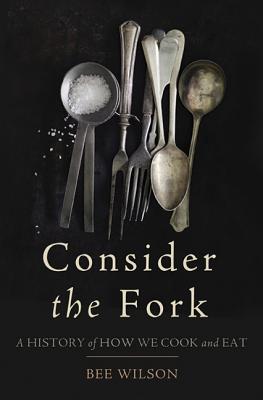
Consider the Fork by Bee Wilson

Target Audience: Food lovers and cooking enthusiasts. This would also work for someone who likes to read about cultural history and the history of everyday objects (see also: Brilliant by Jane Brox).

I love cookbooks, but I don't think about the ingredients as something that just magically appear in my kitchen.  I go to great lengths to know where my food comes from, who grew it, what went into producing it, and the kind of nourishment it provides. It's no secret that I love reading about food, but before reading Consider The Fork, I never really put much thought into my kitchen tools.  What of the vegetable peeler (which I don't own)? Or the wooden spoon (also don't own)? Or the ever-obvious knife (own many)? Wilson's detailed research changes the way we view all of those items we take for granted. After all, my great-great-great Italian grandmother didn't make her famous pesto in an electric food processor, but I'm not about to give mine up for the job.

Consider the Fork tells the deliciously fascinating history of cooking and culinary tools. From knives to coffee grinders to the kitchen fire itself, readers will relish every moment. Just how long did it take us to invent the vegetable peeler? How different are our whisks from the whisks of the Middle Ages? Consider the Fork takes the reader through the history of how we slice, cook, measure, grind, and mold our food.

The book starts out with the obvious beginning: pots and pans. Wilson explains that hundreds of years of cooking has yet to produce a material that will create a pan that will heat evenly, has non-stick qualities, is cost effective, won’t poison the eater, and is also durable. After years of trials and testing, an engineer named Chuck Lemme decided that cast iron rates highest among all available materials. Since I already have cast iron pans, this is the only chapter that doesn't make me immediately want to go out and buy things for my kitchen. Much.

Consider the Fork runs the risk of costing a small fortune for kitchen worshipers, such as myself. The chapter on knives had me all excited to buy a mezzaluna and a santoku, until I realized that the kitchen knife I use everyday is based on a santoku. The chapter on measuring has me convinced that I need to get digital kitchen scales and that it will solve all of my failures with baking.

The final chapter gives the history and origins of the modern kitchen. The kitchen as we know it did not exist until fairly recently. Before electricity, food was stored in cooler rooms away from the blazing heat of the cooking fire. Not until the fire was contained and the ice box was introduced, did food preparation and storage begin to take place in the same room as the cooking. It's odd to think that the room I consider to be the heart of my home would have been a strange sight just a century ago. Our modern obsession with the perfect kitchen is only possible because of the rich history of food preparation.

As a little bonus, each chapter is paired with an appliance that relates to it. These little sub-chapters are only about a page long and give an abbreviated history of a relevant kitchen tool. The pots and pans chapter ends with rice cookers and the measurement chapter ends with an egg timer. These little sections break up the book and give the reader a fun little history of some of our favorite kitchen objects.

Consider the Fork is also peppered with little illustrations of the tools that Bee refers to. I'm not always a fan of these kinds of pictures in books, because they can break up the text in weird ways and seem unnecessary. That being said, they are wonderful in this book. Annabel Lee depicts the implements Wilson refers to most often, which is necessary when trying to explain the subtle differences between certain kinds of knives and eggbeaters that the reader may have never heard of. Her pictures are simple and not at all distracting, all while capturing the personality of the book perfectly.

I will be bending over backwards to recommend this book to customers all holiday season. It is a must-have for any foodie or cooking enthusiast to savor. It's completely unique and it just came out, so you can be sure the recipient doesn't already own it, but will treasure it immediately as a delightful and juicy account of our kitchens.
Buy it indie!


Monday, November 12, 2012

One Hit Cookbook Wonders

Every now and again, while at work, I'll come across a customer sitting in the cookbook section copying down a recipe from one of our books. Some may take issue with that, but I've never really seen the harm in it. Who wants to buy a cookbook for just one recipe anyway? Oh wait, I would.

I've got tons of cookbooks and I'm constantly talking myself out of buying more. I don't even use cookbooks for 95% of my cooking, but I love the inspiration. I'd be lost without baking books, because although I can make a yummy dinner from a seemingly empty fridge, I can't bake to save my life. The thing about having the whole book, is that if you know one recipe is good, chances are, you'll like most of the others as well.

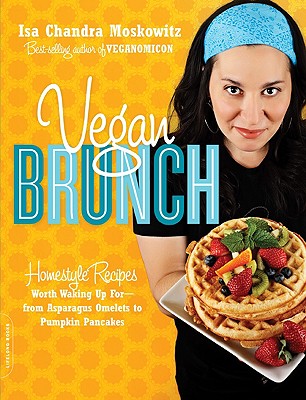
I've got several cookbooks that I bought, mostly because I love one specific recipe. Vegan Brunch is the biggest offender; I use the Perfect Pancake recipe every week for Pancake Saturdays, a weekly tradition in my home. After purchasing it, I discovered other fantastic recipes in there like English muffins, cocoa raspberry muffins, and Tofu Omelets (trust me) , but oh, man those pancakes turn out perfectly every time. You don't even need any fancy vegan things. I often substitute water for non-dairy milk and you'd never know the difference.

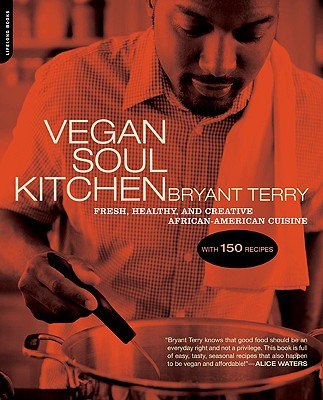
Vegan Soul Kitchen is another one. Well, actually, I use two recipes from that one with regularity. The coconut oil pie crust will come out perfectly no matter what and without tears. My co-workers don't believe me, but I copied down the recipe for some of them, so someday maybe they'll get over the fear of "strange vegan ingredients" and try it out. Truth be told, there are no "strange vegan ingredients" in anything I cook, but I guess even coconut oil is not a regular occurrence in non-vegan pantries. The other favorite from this book is the red rice. Bryant Terry does the most amazing and tasty things with rice, that I would never have thought of on my own. His book can be loved by vegans and non-vegans alike for his whole-food ingredients and his talent for re-thinking the mundane (like rice).

Jo Stepanik's The Uncheese Cookbook is a staple in my kitchen. I originally bought it years ago to help a non-vegan boyfriend come to terms with the loss of cheese whenever I cooked. I don't usually use vegan substitutes for animal products, because they're weird and icky. These are homemade sauces, dips, and blocks that are 100% all natural, because they are home made. You won't find any wacky, hard-to-pronounce ingredients in this book. Best of all, everything in the book can be ready to eat in a pinch. My favorite is the Gooey Grilled Cheese Sandwich or the Macaroni and Cheese Sauce. But the recipe I use most often is actually not a cheese alternative at all, since I still tend to make those only by request of dinner guests, but a pizza dough recipe. The book naturally falls open to that page when I pull it out monthly to make a yummy vegetable pizza.

I'm guilty of writing down recipes from a book I didn't think I'd want later, but my shelves then become cluttered with bits and scraps of paper, and I know I'll never find that awesome recipe for Mexican Chocolate Cupcakes again because I think my cat probably chewed it up while trying to get my attention. And if I can find the recipe again, I won't know what book it came from and which author to trust with my cupcake needs, because I wasn't smart enough to write that information down. I better stop now, because I've made myself hungry. So if you're in the market for a new cookbook, or a new recipe, you could get out a pen and paper in your local bookstore, but you might be missing out on so many other fantastic recipes that you might have found if you brought the book home.

Monday, April 25, 2011

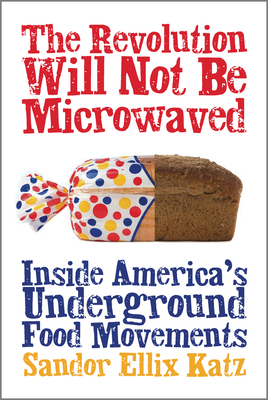
The Revolution Will Not Be Microwaved by Sandor Ellix Katz


I loved this book so much that the whole time I was reading it, I just wanted to find Mr. Katz and shake his hand.  And then invite him over for dinner.

The bookstore had this book sitting on the shelf for about a year and no one had purchased it.  Our book buyer wanted me to pull this lovely treasure from the shelf and return it to the publishers to make room for books that might sell better.  I couldn't do it.  Even though I had not yet read the book, I knew that with a title like this one, it had to be good.  So I promised to read the book, write a review and attempt to hand-sell the crap out of it.  And although my hand-selling skills are limited, I will certainly talk to anyone willing to listen about the reasons this book deserves a spot on the shelves.

This book mixes the some of the good bits of Pollan, Kingsolver, Bittman, even a bit of McKibben.  The point is, you can pick up this book anywhere along your journey to food knowledge and activism.  It can be a beginning, or it can be the next book in a long series of food system information.  Katz touches on environmentalism, heath, the overcomplicated food system, and even throws in some recipes.

What's even better is that Katz doesn't stop short after bringing up all of the problems, he gives examples of what others are doing to solve these problems.  He cites specific organizations and people who fight the system and how they are doing it.  Each chapter has several pages of resources for more information on the problems and solutions. The bibliography alone is enough reason to buy this book.  Getting through it will probably keep me occupied for years.

Buy it indie!

Monday, January 18, 2010

Vegan Freak by Bob and Jenna Torres

This book is a must have for any vegans, vegetarians, or people somewhere in between. It's kind of a how-to guide to surviving in a very non-vegan world, where you will probably be looked at as a freak.

It deals with the obvious question of "why vegan?" and also the less obvious question of "why vegan and NOT vegetarian?" It also deals with the parts of veganism that involve non-food items. I especially like the chapters about how to handle non-vegans, specifically family and friends.

I really identify with and needed something like this book. It explains the importance of having vegans friends and a vegan community. I live in a small town and I'm lucky to know even one other vegan. I spend a lot of time reading vegan blogs and I communicate with my vegan friends in NY whenever I feel like I need a vegan ally. Part of the reason I have this blog is for and outlet for my life and my veganism is part of that. It's frustrating to feel like you're the only person around who sees the very serious cruelty involved in the non-vegan ways of the people around us, especially the people we love.

The only major criticism I have about this book is the editing. In this case, it seems like the major part of the editing process was done by a spell checker and not much more. I found so many major grammatical errors in this book it drove me mad. Simply sending the book to anyone else and having them read it cover to cover would have solved so many of the editing issues. Oh my god I have never read a book with so many typos. Even my college papers had less problems than this book. Bob and Jenna, if you're reading this, I adore you guys, but please fix this stuff before the next printing. (For all you people out there who would argue that my own blog is full of errors, I'll remind you that I openly admit to not proofreading mot of this, it's not a published book, and I make absolutely no money from it. It's a hobby, not a job and is in no way professional.)

I don't want to make the book sound amateur, it's not. It's so clear that a lot of thought and research went into it. They include many other books to refer to for more information and help on any of the many topics they touch on in the book. It's a starting point, and an important one. So, if you're vegan, or thinking about it: go buy this book! Or borrow it, whatever.

Saturday, December 26, 2009

Eating Animals by Jonathan Safran Foer

Eating Animals is kind of a 'tough love' sort of a book. It's not a lecture and it's not a rant. It's different than most books about vegetarianism. Foer wants to put the facts out there and let you make the decision. He writes this book under the assumption that once people have all of the information, they'll make the choice that's right for them. And I agree. There are people out there who will never care about animal cruelty, or will care, but still tell themselves there is nothing they can do. Those people are a lost cause and the book wasn't written for them. It was written for people who do have enough will power to make changes in their lives. This book is for people who know that the choices they make affect everyone around them.

Foer started to think about vegetarianism (and this book) when he started to think about being a father. Like so many people he had wanted to be a vegetarian for years and had struggled with it his whole life. He knew it was the right thing to do, but still couldn't manage to do it. He cared about animals, but he also cared about eating whatever tasted good to him. When he realized he was to become a father, his food choices suddenly started to matter. He was to set an example for his son. He was going to be a role model and he wanted to be a good one.

Foer tries very hard to get all angles of the argument. He gets letters from activists of all kinds, factory farmers, family farmers, a vegan who designs slaughter houses, a vegetarian who raises beef cattle. Of course these contradictions annoy me, but they also make me really think about what the goal is. Is the goal to stop animal cruelty, or stop animal slavery? Is the goal to cause less suffering, or no suffering? At the end of the day do these people feel good about the choices they have made? Do they think they are making a difference? Do they really feel happy about the lives they are leading? If they do, maybe they are doing more good than harm. Maybe they are on the best path they can be on. Of course to me, and to Foer, any harm at all is enough reason not to eat meat (most of these family farmers still brand their cattle, and all of them send their animals to slaughter houses. None of these animals ever grow to full adulthood).

My favorite part of this book was the chapter of definitions. Several pages with common animal farming terms put into plain (and sometimes hilarious) English. Even though I read heavily on the subject of food, there are so many things in this book I had never heard before, so many good points that had yet to be made. Are you aware that cattle are often fed ground up cats and dogs that are euthanized at shelters? That pigs become so distressed in their living conditions that even a tractor driving by outside (they are kept inside for their whole lives) can cause them to fall over and die of fright?

He ends the book with Thanksgiving. To have a turkey, or not to have a turkey? He talks about tradition, culture, family history, values. He talks about the origins of thanksgiving and the history of the turkey as a center piece. He points out that the turkey doesn't make Thanksgiving. It's the coming together, the family, the thankfulness. The truth is, having a dead, mutated, genetically altered, abused carcass as the center to a holiday about charity is a gross contradiction and he sees that. The turkey doesn't make his holiday table.

My only criticism of this book is this: like Micheal Pollan (who he chastises for doing just this), Foer doesn't address his own contradictions. Not once does he mention the dairy industry. Not once. He talks a bit about laying hens, but not enough to actually point out that eating chicken eggs is just as bad as eating chicken meat (if not worse because at least boiler hens are not kept in battery cages). He lets himself completely off the hook. The entire book is dedicated to the problems with factory farming, but that's where more of our dairy comes from, and almost all of our eggs. If he finds issues even with the family farms in his book (which he does), than how does he explain his consumption of dairy and eggs? I kept waiting for him to address this, but it never comes up.

So yes, I loved this book. I think it's a wonderful starting point. A well written starting point. But it is just a start. I wanted it to go further.