Showing posts with label non-fiction. Show all posts

Monday, May 27, 2013

Gulp by Mary Roach

Mary Roach’s books have been on my to-read list for a long time. However, when your job depends on knowing what’s new and great, reading an author’s backlist can be difficult to find time for. Naturally, when Roach’s newest book came out, I jumped at the chance to finally make time for this intriguing writer. Right now I’m kicking myself for not having read her other titles sooner. Everything they say about Mary Roach is true. She’s exactly what a great science author should be: easy to understand, incredibly interesting, and outrageously hilarious. Outrageously.

In a way, I’m glad I waited. Gulp is the perfect follow-up to Salt, Sugar, Fat; It details some of the science that Moss hinted at. Gulp is a scientific exploration of digestion, from start (the nose) to finish, (the toilet). It may sound as though the book could be disgusting, but I assure you, it isn’t. Roach makes her intentions clear from the start: she wants to fascinate the reader, not cause disgust (much). In this, she achieves her goal. From the first chapter I was completely engrossed, but never grossed-out.

One of my favorite things about this book were the footnotes she sprinkled liberally throughout the book. They are like little asides to the reader; not quite pertinent to the main subject, but too interesting to be left out. It’s as though I’m sitting next to her in biology class and she is passing me silly notes about the subject until the bell rings. I found them distracting at first, but soon started looking forward to them, as a great tool for sharing extraneous information, without derailing the whole book. Her humor rivals that of David Sedaris and her best jokes are in these little notes. Thankfully, I am not in biology class, so I can giggle freely while reading, which I think Roach probably did as well while writing.*

I do most of my reading during my lunch break at work, which can make reading about digestion and bowel movements less than desirable. However, true to her oath in the introduction, this book isn’t gross, it’s interesting. There is so much I never knew about the digestive system, or more importantly, so much I didn’t realize I wanted to know about the digestive system. Roach interviews scientists and professionals involved in everything from saliva, to flatulence, to Elvis Presley's doctor. It would seem that Roach has no limits to journalistic inquiry, even emailing the United States Conference of Catholic Bishops for more information about the possible history of holy water enemas being used in exorcisms.

I would recommend reading this book next to an internet-ready device, because in some cases, Roach can only begin to scratch the surface of the story. I spent a considerable amount of time reading about Horace Fletcher; one chapter simply isn’t enough to cover someone like him. The book isn’t about Fletcher, Komodo dragons, competitive eating, or any number of equally interesting things Roach talks about; it’s about the science and stories that make up the alimentary canal, thus prompting me to look further into many of the subjects Roach brings up. For someone with an endless appetite for information (example: people who look up one thing on Wikipedia, only to get sucked in for two hours), Roach’s writing style can be dangerous and time consuming, but also heavenly.

Now that I’ve finished Gulp, I can’t wait to dig into that backlist. If Roach can make digestion, gassiness, and saliva this interesting, imagine what she can do with cadavers and superstition. Irresistible!

*Her fascination with names that correspond to professions reached its peak with Dr. Crapo who coined the term “Dung Lung.”

Buy it indie!

Monday, May 13, 2013

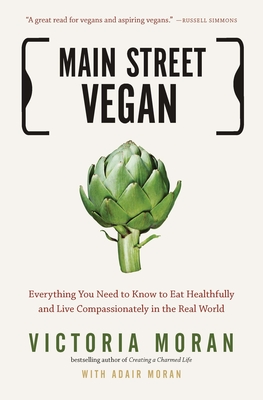
Main Street Vegan by Victoria Moran


I saw Victoria Moran speak at Farm Sanctuary’s Annual Thanksgiving celebration for the Turkeys last year.  As I enjoyed my tasty vegan Thanksgiving dinner, she talked about her years of vegan experience and of helping others go vegan.  She is an amazing and positive person that one can’t help but immediately take a liking to and gravitate toward.  She explained that before going vegan she was overweight and miserable.  You’d never know it from seeing her now.  She is vibrant, fit, and radiating happiness.  She talked a little about her book and I made a mental note to order it the next day at work.  My boyfriend was also impressed by her and said he would like to read the book when I was done with it.   

After the first few chapters, which were the basic how-tos, I found myself getting sucked deeper and deeper into the book.  Moran offers new insights to long-time vegans as well as great advice for beginners.  There’s great information about nutrition, explaining the best ways to get all of the important nutrients we all need (yes, she explains where to get protein, please don’t ask that question ever again).  She even inspired me to take up homemade smoothies for breakfast, which have instantly become a huge hit (hello endless energy in the morning!).

Each chapter includes fantastic recipes at the end, usually related to the topic of the chapter.  There’s some comfort food in there, as well as some interesting new tastes to try.  I’ve made several of the recipes from that book, most of them are simple, but still amazing.  For a fast and easy treat I highly recommend Gena Hamshaw’s Collard Wraps (I used Swiss chard instead of collards because I like it better).  When I make them for dinner we can never get enough.  I’m going to refrain from listing all of the yummy recipes I tried from this book and just assure you that they’re delightful and easy to throw together at the end of a busy day.

Which brings me to my next point: this book is written for average people.  Veganism isn’t just for people with private chefs (as Oprah may have us believing), or people who can drop $500 on the weekly trip to the grocery store.  Veganism is for average people (like me!).  It helps if you have some knowledge of how to operate your kitchen, which Moran does point out.  On the bright side, cooking most of your meals from scratch won’t take as long as you think and will save you buckets of money, which is great for those of us on a budget.  She also includes great shopping resources for non-food items and explains why it’s important to take your shoes, as well your dinner, into account when making the switch to veganism.

Moran lays out the transition to veganism as an easy and gradual path.  She includes the usual information about why the meat and dairy industry are the most horrible things on the planet, but she also understands that most people can’t just drop all of their vices at once.  She explains that doing less harm, on your path to doing no harm, is perfectly acceptable and understandable.  For some people this transition may take a while, but that’s ok.  I dabbled in veganism for years before actually doing it.  However, once I jumped in, I stayed in.  I’ve never been happier.  And neither has Victoria Moran.


Buy it indie!

Monday, May 6, 2013

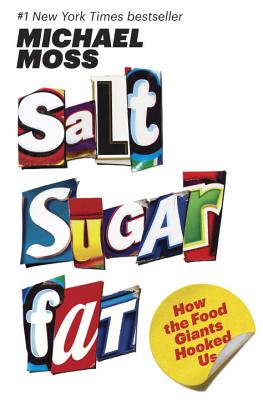
Salt Sugar Fat by Michael Moss


How do I even begin?  This book is huge.  Not physically huge, just a huge deal for your life.  You need to read it.  I could end with that, but you’ll probably want me to explain why.  Fine...

Salt, Sugar, Fat is mind-blowing.  Coming from me, that’s saying something.  I read a lot of books about food and I try to avoid processed foods like the plague.  We all know this stuff is bad for us, but we eat it anyway because it also tastes good.  This isn’t an accident.  Obviously food companies want their foods to taste good, but the extent to which they use salt, sugar, and fat to trick our bodies into eating more and more of it is criminal.  They manipulate the ingredients, knowing it will cause people to overconsume.  Any ideas of trying to manufacture healthier foods are immediately shot down by wall street and industry executives.

Each section of this book sucked me in even further and elicited even more shock.  In fact, they are presented in the order that would create more shock as you go.  We all know the dangers of sugar, though not a great deal about the science, so Moss starts with it.  It’s no surprise that fat is not great for us.  What I didn’t know is that putting fat in a food can raise your tolerance for sugar, which will allow you to eat a lot more before your body tells you to cut it out, if it ever does.  He ends with salt.  We know too much salt is bad.  We know it leads to high blood pressure.  But we have it under control.  We’ve made an effort to keep our hands off the salt shaker during meals.  Except, that doesn’t even matter.  Processed food is teeming with added salts and our tolerance for salt is so high, that we don’t even notice how much we’re consuming.  The most shocking part of the salt story is what happens to children raised with and without heavy loads of salt in their diet.  Children raised with high salt diets, crave it in unprecedented amounts.  Children raised with little salt, turn their noses up at salty foods.  We’ve been raised to crave foods that are bad for us, and in the case of salt, we’ve done it to ourselves.

Moss did years of research and interviews for this book.  It is not a science book, so any science in it is immediately easy to understand.  He’s a great journalist who understands his readers. The book is made up of stories and anecdotes about the food industry, so that by showing us the smaller, more personal picture, Moss can give his readers the much bigger one.  He shows us that the issue is not black and white.  The food industry is making us sick and they are well aware of it, however, they can not stop themselves.  Their customers are hooked on the food and now they will not settle for anything healthier.  In a way, the only way out of this situation is government regulation.  I’m not a huge fan of regulation, but prefer education.  However, in the case of our health, perhaps the slower moving education road, will not be enough.  We may have reached a point where the food giants can’t stop and education alone is not enough to have us stop ourselves.  

After everything I’ve learned, reading this book still kind of made me want an Oreo Cookie.

Well, more like a Newman’s O.

Monday, March 11, 2013

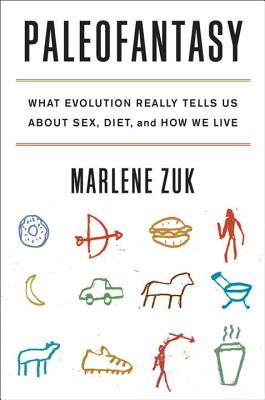
Paleofantasy by Marlene Zuk

I first heard of Paleofantasy when our rep from WW Norton, David Goldberg, came in to the bookstore to talk about some upcoming releases.  Naturally I snatched up the book as though everyone in the room would immediately lunge for it, but, as usual, my co-workers just stared at me.  It’s no secret that I love science, but this whole paleo-diet trend that’s been making the rounds has made me even more passionate about my desire to see science finally being taken into account before anyone jumps on the paleo-bandwagon.  

Paleo-dieters and lovers of the caveman lifestyle believe that homosapiens stopped evolving some time around moving into caves and that modern man is not fit for our current lifestyle.  They blame all manner of diseases on the idea that humans were not meant to live as we do now and that agriculture is killing us.  Marlene Zuk, a biologist and professor at the University of Minnesota, argues that evolution doesn’t stop and to argue that we were “meant” to do something is an argument that evolution has some kind of end goal, which is a little ridiculous. Zuk combines biology and anthropology to disprove many of the myths that paleo-lifestyles are based on.  Although we don't know exactly how early man lived, Zuk dispels the most common ideas through meticulous research and, best of all, science.

This book isn’t an attack on paleo-lovers, it’s a scientific answer to the believe that we’d all be better off as hunter-gatherers.  In many cases the arguments made about caveman lifestyle are not true to begin with, so there is no reason to believe that living that way now will be any healthier.  Zuk’s overall point was that there is no one way that cave-dwellers lived.  There were multiple societies, each with their own way of living and eating.  For example, Zuk explains how our ability to digest dairy and grains has been a recent(relatively speaking) product of evolution.  However, there is evidence to suggest that some groups of early-man did eat grains or dairy, while others didn’t.  Paleo-enthusiasts may be healthy because they make an effort to exercise and not eat processed foods, but not because they don’t eat grains or abstain from dairy.

Zuk isn’t on a mission to make paleo-people feel bad, or ruin their dreams of caveman rockstardom; her only desire is to shed some light on the science behind the the trends.  In some cases, there is scientific evidence to back up the healthfulness of paleo-lifestyles.  For example, barefoot runners run differently than those in sneakers and tend to suffer fewer injuries.  In terms of child-rearing, there seems to be a case for raising children with alloparenting, letting a newborn set it’s own eating and sleeping schedule, and keeping the child either in, or near the parents’ bed.  

Paleofantasy is a fascinating and accessible read that I had trouble putting down.  This book shows that while it’s no secret that many of our modern problems are caused by poor lifestyle choices, that doesn’t mean we all need to give up eyeglasses, stop eating quinoa, and give blood as often as possible to try and imitate the life we think (without any real scientific evidence) cavemen may have lived. 
Buy it indie!

Monday, February 25, 2013

The World Until Yesterday by Jared Diamond

Many people fantasize about a world long gone, where life was less complicated by modern day complexities and technology.  Diamond has set out to clarify just what we gave up by moving out of hunter-gatherer bands and into high rises. His latest book compares traditional societies with modern lifestyles without glorifying or vilifying either.

Diamond explores just a few aspects of life, including conflict resolution, war, child rearing, the treatment of elderly, eating habits, and even how different people react (or don’t react) to coming in contact with a stranger.  He argues that both modern cultures and traditional ones have some advantages and some weaknesses in all of these areas.

The fantasy of a less complicated life is just that, a fantasy.  Traditional cultures may not have to worry about job security, but they do need to worry about famine and disease.  Some may also need to worry about whether or not they will be seen as useful as they age, or if their family will kill them as they become more of a burden.  Modern society also has the advantages of being able to live peacefully with people we don’t know, whereas Diamond explains that many traditional people might be inclined to kill a stranger on sight.

Just as there are advantages to modern society, there are areas where it falls behind the traditional ones.  Looking specifically at American culture, most children speak and understand only one language, though recent studies have shown there are advantages to being multi-lingual, which most traditional societies are.  Traditional societies also don’t suffer from the same western diseases that many Americans do, such as hypertension, type-2 diabetes, and heart disease.  People in traditional societies tend to be fitter; their lower life expectancy is generally the result of less access to emergency medical care and the availability of food.  According to Diamond, children in traditional societies also tend to focus on games that require cooperation and critical thinking, but almost never on competition.

Knowing nearly nothing about anthropology or traditional societies, I still found this book perfectly accessible and highly interesting.  I found myself looking forward to each new chapter and the critiques and observations it would contain.
As always, Diamond is a readable expert, making this book perfect for the casual reader or the scholar.  

Buy it indie!

Monday, February 11, 2013

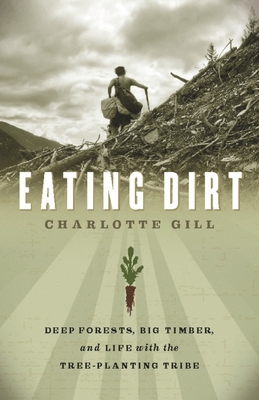
Eating Dirt by Charlotte Gill


Eating Dirt is not at all what I was expecting.  Tree planters are not the kind of people I was expecting either.  Tree planters are down and dirty.  They are not flowery people and Gill makes no attempt to hide all of the nitty gritty details of their working lives.  She also makes no secret that while they do believe in the work they are doing, at the end of the day it's a way to pay bills, make money, and get by.  They're not on the front lines of environmentalism, they're more like clean up crews and they are a little jaded from it.  Once they get to a site, it's already been logged.  There is no natural beauty left, just the broken landscape and another opportunity to earn a day’s wage.

Despite all of this, the book is not sad.  It's not about environmentalism, it's about tree planters.  It's their story.  And those stories are not boring, or dark, or without hope.  They are hard working people but you've never heard about them before.  They've been around as long as man has been logging, and they'll be around as long as there are trees left to be cut down and replanted.

Gill brings this book to life with her rich writing and I found myself forgetting that I was reading non-fiction.  I wanted to hear the end of the stories she told and what happened to the people who passed in and out of her tree-planting life.  But true to life, the stories aren’t over yet and so have no ending.  Sometimes people just drift away.

Although the book reads as fluidly as fiction, there's no mistaking the truth in Gill's words.  She has both researched and experienced the lives of trees alongside man.  She explains the history of logging and tree planting.  She explains the fall of civilizations from over-logging.  She reminds us that, for all of our advancements, we are still making the same mistakes that many doomed civilizations before us had made.  For all of our technology, a tree’s purpose in the world has not changed.  All that has changed is man's ever-growing desire for the endless uses of felled trees.

Buy it indie!

Monday, November 19, 2012

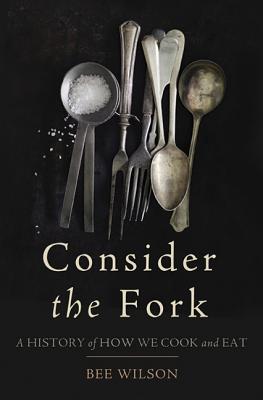
Consider the Fork by Bee Wilson

Target Audience: Food lovers and cooking enthusiasts. This would also work for someone who likes to read about cultural history and the history of everyday objects (see also: Brilliant by Jane Brox).

I love cookbooks, but I don't think about the ingredients as something that just magically appear in my kitchen.  I go to great lengths to know where my food comes from, who grew it, what went into producing it, and the kind of nourishment it provides. It's no secret that I love reading about food, but before reading Consider The Fork, I never really put much thought into my kitchen tools.  What of the vegetable peeler (which I don't own)? Or the wooden spoon (also don't own)? Or the ever-obvious knife (own many)? Wilson's detailed research changes the way we view all of those items we take for granted. After all, my great-great-great Italian grandmother didn't make her famous pesto in an electric food processor, but I'm not about to give mine up for the job.

Consider the Fork tells the deliciously fascinating history of cooking and culinary tools. From knives to coffee grinders to the kitchen fire itself, readers will relish every moment. Just how long did it take us to invent the vegetable peeler? How different are our whisks from the whisks of the Middle Ages? Consider the Fork takes the reader through the history of how we slice, cook, measure, grind, and mold our food.

The book starts out with the obvious beginning: pots and pans. Wilson explains that hundreds of years of cooking has yet to produce a material that will create a pan that will heat evenly, has non-stick qualities, is cost effective, won’t poison the eater, and is also durable. After years of trials and testing, an engineer named Chuck Lemme decided that cast iron rates highest among all available materials. Since I already have cast iron pans, this is the only chapter that doesn't make me immediately want to go out and buy things for my kitchen. Much.

Consider the Fork runs the risk of costing a small fortune for kitchen worshipers, such as myself. The chapter on knives had me all excited to buy a mezzaluna and a santoku, until I realized that the kitchen knife I use everyday is based on a santoku. The chapter on measuring has me convinced that I need to get digital kitchen scales and that it will solve all of my failures with baking.

The final chapter gives the history and origins of the modern kitchen. The kitchen as we know it did not exist until fairly recently. Before electricity, food was stored in cooler rooms away from the blazing heat of the cooking fire. Not until the fire was contained and the ice box was introduced, did food preparation and storage begin to take place in the same room as the cooking. It's odd to think that the room I consider to be the heart of my home would have been a strange sight just a century ago. Our modern obsession with the perfect kitchen is only possible because of the rich history of food preparation.

As a little bonus, each chapter is paired with an appliance that relates to it. These little sub-chapters are only about a page long and give an abbreviated history of a relevant kitchen tool. The pots and pans chapter ends with rice cookers and the measurement chapter ends with an egg timer. These little sections break up the book and give the reader a fun little history of some of our favorite kitchen objects.

Consider the Fork is also peppered with little illustrations of the tools that Bee refers to. I'm not always a fan of these kinds of pictures in books, because they can break up the text in weird ways and seem unnecessary. That being said, they are wonderful in this book. Annabel Lee depicts the implements Wilson refers to most often, which is necessary when trying to explain the subtle differences between certain kinds of knives and eggbeaters that the reader may have never heard of. Her pictures are simple and not at all distracting, all while capturing the personality of the book perfectly.

I will be bending over backwards to recommend this book to customers all holiday season. It is a must-have for any foodie or cooking enthusiast to savor. It's completely unique and it just came out, so you can be sure the recipient doesn't already own it, but will treasure it immediately as a delightful and juicy account of our kitchens.
Buy it indie!


Monday, October 29, 2012

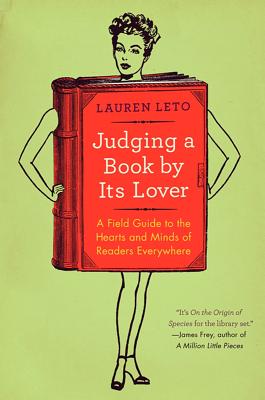
Judging a Book by It's Lover By Lauren Leto

The holiday season is fast approaching, so my next few reviews will feature some books that make great gifts.  I'm going to be honest here and admit that the stuff I usually read doesn't always make the greatest gift.  Only people as insane as myself will appreciate the doom and gloom of Bill McKibben during the holiday season.

Target Audience: Book lovers and wannabe book lovers.

This hilarious book was written for readers.  I loved this book so much I was sad when it ended.  I tried to just read one section a night, to keep it going for a little longer and as little rewards after work., but I ended up finishing it in just a few days after my resolve gave out.  Good books are addicting as anything and impossible to put down.

Leto is a die-hard reader.  She's well-read in everything from classics, to modern classics, to modern garbage.  But this book isn't really about what she's read, so much as it's about things she's learned just by being a reader.  For example, there's a chapter about the proper way to pick someone up in a bookstore.  There's also a chapter about the physical book and how readers should prefer the cheapest, lightest copy.  I disagree with her there, being madly in love with hard cover gift editions that look so lovely on my shelf.  And overflowing onto the floor next to my shelf... oops.

As a bookseller I loved the section on How To Fake It.  She talks about the kinds of people who love certain authors and the stereotypes they fall into.  According to Leto, the kind of woman who reads Philippa  Gregory is one that has a repressed desire to go to the renaissance festival.  Can't really argue with that.  She then summarizes several major authors and their three most famous or important works, so that you can talk about them in conversation, while appearing to have read them.  Since I Fake It repeatedly throughout the day at work, I obviously found this very informative.*  I also discovered that, as someone who loves Hesse, I am required to own one straw chair. Hmm.

My favorite section was not about the books, but the authors.  In the chapter Your Movable Feast, Leto imagines what it would be like to have dinner with some of the most famous author couples.  She's got to start with a bang, so begins by getting drunk with the Fitzgeralds, eating bacon with Krauss and Foer, and then ends up fawning over Franzen, but Faking It with his wife.

I read this book at night, in bed, constantly cracking up and causing my boyfriend to stop his own reading and make me read what had made me laugh, and then explain why it was funny.  I say this not to speak poorly of my boyfriend, who is actually very well read, but to warn of the dangers of buying this book for someone who isn't madly in love with books.  Sure, they'll laugh, but not as much as they could, or should.  It's like taking a non-theatre person to go see [Title of Show].  See, you had no idea what I was talking about.  Just trust me on this.

*Disclaimer: I do not lie at work about what I have read.  I do however, have a knowledge of what many popular books are about and the kinds of people who read them, so I stand by Leto's "Faking It" as an excellent resource for booksellers.


Buy it indie!

Saturday, October 13, 2012

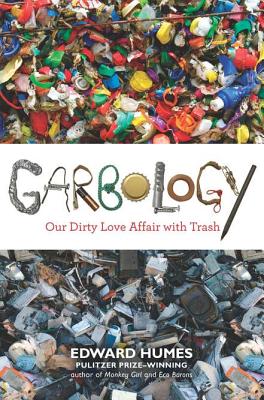
Garbology by Edward Humes

Garbology is one of the best environmental books I've ever read, and coming from me that's saying quite a lot.  Not only is the book accessible to anyone, it's also insanely interesting to anyone.  Humes is an excellent writer and journalist.  His statistics and sources are well cited and researched, and always relevant.

The subject of trash is an interesting one and something I've spent a lot of time thinking about.  We all create trash and by putting it in the trash can and setting the trash can on the curb, we believe we are doing our part in protecting the environment by not littering.  But where does it all go?  By sending it away to a dump are we really avoiding litter?  What really constitutes as litter anyway?  More importantly, why do we create so much trash to begin with?

Humes starts the book in the most logical places one can start a book about trash: the dump.  He begins the book by presenting the problem of garbage and the ever-looming question of what to do with it all.  He then gives a detailed and fascinating history of how trash was dealt with before the modern dumps, before we needed empty canyons to fill, because we wasted less, though Humes points out that trash was no less of an issue then as it is now.  He moves on to rogue trash, which doesn't make it to the landfill, and often ends up in the ocean, which has turned into a kind of plastic soup.

The second part of the book is dedicated to the study of trash, garbology.  Humes proposes that knowing we have a problem is not enough, we must get to the cause and the cultural habits behind the problem.  Here he turns to the worlds first garbologist.  Bill Rathje can probably go through your trash and know your household size, age range, income, and personal habits, without ever meeting you.  There's a lot of information out there abut trash, and he is the original trash fact-checker.

A team of people set up a trash tracking system to study where garbage goes after it is discarded and how long it takes to get there.  The results were scary.  Some bits of trash, especially recycled electronics (printer ink cartridges were the worst offenders) were shipped thousands of miles, back and forth across the country for days. Even though these things are being recycled (we hope), the system itself is so wasteful it's better to stick with reducing waste, rather than thinking we're off the hook by recycling.

The final part of the book is dedicated to solutions, from high-tech, large scale solutions, to simple at home solutions.  He gives us the story of Bea Johnson, whose family throw away virtually nothing.  Their households yearly waste can fit into a mason jar.  I thought I was doing well with only a five gallon bucket every  three months, but suddenly I found myself a little jealous.  I tend to agree with the low-tech solutions, mostly because the problem started with an abundance of technology and consumerism.  Personally, I think the best way to solve the problem of over-consumption is to stop consuming, though the thought of a garbage death ray is pretty rad, I must admit.

I've persevered through enough non-fiction to know that it can get rather dry and dull.  I've enjoyed books that I could never call page-turners, however, this book is absolutely a page-turner.  It has a very clear beginning, middle, and end.  In fact, as soon as I finished it, I couldn't wait to share the book with several other people.  I even went as far as calling a bookstore in Sante Fe, to purchase a copy for a friend who lives there.  I'll often mail a book to someone who I know would enjoy it, but I'm not really willing to part with this one permanently.

Buy it indie!

Tuesday, June 21, 2011

Farewell My Subaru by Doug Fine


I stumbled upon this book in one of Brattleboro's FIVE bookstores.  It was on sale so I picked it up, thinking it looked like fun.  Turns out you can judge a book by its cover, because fun it is.  Doug Fine is a humorous writer and a great story teller.  At 200 pages it's a quick and enjoyable read but still full of insight.

Fine moves to the New Mexican desert with the goal of kicking his fossil fuel habit and getting off the grid.  He has no experience whatsoever with ranching, farming, or any of the things people need to be self-sufficient.  To top it off, he's a Wal-Mart addict.  But, he kicks his addiction early in the book and makes no secret of the fact that he asks for help whenever he can.  He also buys two goats to help him get his other habit off-grid: ice cream.

A few solar panels, and one veggie oil run monster truck later and Fine is well on his way to reaching his goals.  He plants a garden (several times, due to many crop-decimating hail storms), installs a solar hot water heater and gets himself some chickens.  He almost makes the task seem simple (given the right friends and enough money, of course).  He certainly makes it seem fun, especially with all of the humorous and well-placed recipes (rattlesnake stew when he discovers a rattlesnake near his home, although in this case the rattlesnake escapes unharmed).

The part that I found most interesting was his veggie oil car.  I had all but forgotten about these little miracles with my secret (ok, not so secret) obsession with buying an electric car and powering it with solar panels.  Of course a much cheaper option is to get an old diesel car and convert it to veggie oil.  It's a great deal all around because normally restaurants have to pay someone to pick up their used oil and normally drivers have to pay higher and higher prices for their gas.  The image of a massive fuel-guzzling truck roaring around town spurting out chinese food-scented emissions is almost too good to pas up!

My only criticism of this book is the lack of sources.  Throughout the story Fine drops a few facts and figures having to do with energy and resource consumption, typical statistics to find in a book on environmentalism, but he sites no sources.  Where did this information come from?  There is no bibliography, no where to go for further reading.  If he picked these facts up from the internet, what are the websites?  Who did the studies?  Who collected this data?  I've never come across a book with facts that lacked sources and I found the whole thing confusing.

All in all, it was a great book and although it's not in my section at the bookstore now, it will soon.

Buy it Indie!

Monday, April 25, 2011

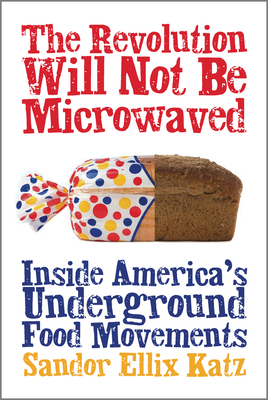
The Revolution Will Not Be Microwaved by Sandor Ellix Katz


I loved this book so much that the whole time I was reading it, I just wanted to find Mr. Katz and shake his hand.  And then invite him over for dinner.

The bookstore had this book sitting on the shelf for about a year and no one had purchased it.  Our book buyer wanted me to pull this lovely treasure from the shelf and return it to the publishers to make room for books that might sell better.  I couldn't do it.  Even though I had not yet read the book, I knew that with a title like this one, it had to be good.  So I promised to read the book, write a review and attempt to hand-sell the crap out of it.  And although my hand-selling skills are limited, I will certainly talk to anyone willing to listen about the reasons this book deserves a spot on the shelves.

This book mixes the some of the good bits of Pollan, Kingsolver, Bittman, even a bit of McKibben.  The point is, you can pick up this book anywhere along your journey to food knowledge and activism.  It can be a beginning, or it can be the next book in a long series of food system information.  Katz touches on environmentalism, heath, the overcomplicated food system, and even throws in some recipes.

What's even better is that Katz doesn't stop short after bringing up all of the problems, he gives examples of what others are doing to solve these problems.  He cites specific organizations and people who fight the system and how they are doing it.  Each chapter has several pages of resources for more information on the problems and solutions. The bibliography alone is enough reason to buy this book.  Getting through it will probably keep me occupied for years.

Buy it indie!

Tuesday, April 5, 2011

No Impact Man by Colin Beaven

I knew the moment I saw this book that I would love it.  And I do.  Beavan spends a lot of energy judging people and governments for the state of the environment, but does little to examine his own life, or even make the simplest changes.  After watching Anne Leonard's video, The Story of Stuff, he realizes it's time to make a change.  He devises a one year project called No Impact Man that will rid himself and his family of all possible environmental impact.

I'm a strong believer in doing all of it, or none of it, which made me really appreciate Beavan's amazing commitment.  I found a lot to be inspire by in this book, even though I consider my own footprint to be fairly light.  His complete refusal to create any waste really made me think about how much I waste, that I really don't need to.

The best thing about this book was that Beavan creates a more fulfilling life for himself and his family by simplifying.  Instead of rushing around, they make more time for each other.  Instead of take-out, they cook their own food and sit down with each other.  Instead of taking a cab, they enjoy the city by waling or biking.  Instead of watching TV, they play games.  On top of the improvement in their health and quality of life, they saved a ton of money by not shopping, using no electricity, cutting out disposable products, making their own cleaners, and not paying train and cab fairs. Not to mention what they will probably save long-term for medical bills by taking better care of themselves.

Beavan doesn't just write about what he did, he writes about why he did it.  He writes about what he got out of it.  His reflections about our way of life are so simple and logical, yet we hardly ever stop and really think about the fact that we can change if we want to.  He discovers that there is no reason for him to rush around when all he really wants to do is spend time with his family.  There is no reason to order take out when he can make the time to cook.  There is no reason to wrap his baby girl in toxic plastic diapers if they can take a few extra minutes to wash some fabric ones, which she prefers by the way.

The motivation behind every choice he makes is backed by statistics and very clear research.  The facts he uses throughout the book really drive his point home.  The need to get involved becomes emotional.  It's not some far-off problem we'll deal with when it happens, it's something we have to address now.  The fact that stuck with me most, which I have pondered every day since reading it, is this: 80% of everything manufactured on this planet today is created to be used only once.  We live on a planet of finite resources.  People all over the world die for oil, entire ecosystems are ruined for it, and we are throwing away 80% of everything we make with it after the first use?  Why?!?!

It's no wonder his book inspired me to change my own habits.  I'm not sure how anyone could read it and not be driven to change, even just a little.

Friday, April 16, 2010

That's Why We Don't Eat Animals by Ruby Roth

Kids ask so many freaking questions!  I have found myself in so many awkward situations because I wasn't exactly sure of the most appropriate way to explain certain things to a child.  My veganism is one of those tricky subjects.  I think kids should know where food comes from and that some of it may have come from an animal, but I don't think it's ok to scare kids into veganism, and it's inappropriate to step on another parent's toes.  However, kids ask questions because they need to understand their world and the different kinds of people that they share it with, vegans and meat-eaters alike.

This book is one great way to tackle that scary question, "What's a vegan?"  It's a wonderful book about vegetarianism for kids.  It's a very gentle and un-scary way to explain what veganism is and why some people don't eat animals.  The illustrations are very sweet, depicting happy animals in natural settings and sad animals in factory farms.  I also have to say that, as an adult, I still enjoyed this book for myself and managed to learn a few things from it.  Did you know that a heard of cows will all moo together until a missing member finds its way home? I didn't.

Now, don't even ask me where to begin when a kid wants to know where babies come from.  Go ask your mother.

Sunday, March 14, 2010

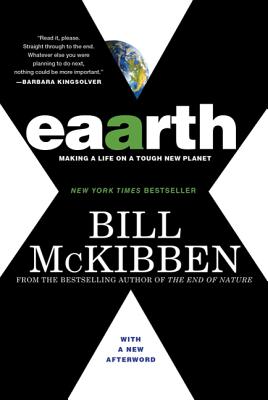
Eaarth by Bill McKibbon

If it were up to me I'd make this book required reading for everyone on the planet. It's one of the most important books ever written about climate change. In fact, the only reason it's not the most important book, is because books written in the 70's and 80's predicting climate change were far more important, though mostly ignored. If we had only listened then, we would need a book like Eaarth now.

The book starts strong. It caught my attention quickly, citing specific examples of climate change and it's results on both massive and small scales. I thought the reason the United States didn't take much interest in climate change was because those hardest hit by changes in the weather lived in other parts of the world, but the truth is, we've been hit too. The major difference is that American people, supported by the US government, have the money to import food, crank up the AC and even pack up and move if we want. However, at the rate we're going, we're going to reach a point where all the money in the world won't be able to buy you food that just won't grow, or remove the pollution from your water, or save your life when a hurricane crashes into your town.

But the book isn't all doom and gloom. McKibben simply wants to make sure you're listening. He wants you to know that you're not saving your children or your grandchildren anymore, you're saving yourself. He wants you to you fully understand that the planet has been fundamentally changed and it's not ever going to change back. The most we can do is stop things from getting worse. It's a really hard piece of information to swallow.

The second part of the book is more hopeful. McKibben doesn't have all of the answers to survival, but the ideas he has are really good ones. His points are valid. I really liked his idea of communities providing for themselves and looking out for each other. Why buy your electricity from a power plant when you can generate it yourself? There's real security in being able to take care of yourself. When oil starts to dwindle and the prices skyrocket why not power your electric car and your house at the same time with solar and wind power from your own yard? His point is that we can't wait for big government to save us and provide for us, we have to show them what we want. With the world in the state is in right now, bigger is not going to be better. We have to scale down, start taking back the power to care for ourselves.

McKibbon isn't attacking the government. He praises large scale projects like highways and general infrastructure. This country grew and grew and because of that, American people enjoy a fairly high standard of living. It's time to stop growing though. It's time to adapt to the world we created. No book I've yet read makes that more abundantly clear than Eaarth.

It ends on a good note. The kind of ending that makes it easier to recommend this book. He uses Vermont as a model for sustainability, but he talks about larger-scale projects as well; things that are working. He also points out the importance of the internet. The internet, this crazy tool that can connect anyone, anywhere. For example, I'm writing this review while sitting on a bus to NYC. The wireless internet connects me to millions of people, the biggest forum ever known. Any idea I'll ever have can instantly be shared with he world. There is no need for us all to be isolated, we can figure out solutions and move forward as a group. I can instantly find information about powering my own home, growing my own food, and converting my car to run on veggie oil by just getting online. The limitless connections of the internet are a gift when most of us don't even know our own neighbors. It's a hope, in a world where hope fades more and more the longer we live the way we do.

And, in the interest of saving paper, I will gladly loan you my copy.

Friday, February 19, 2010

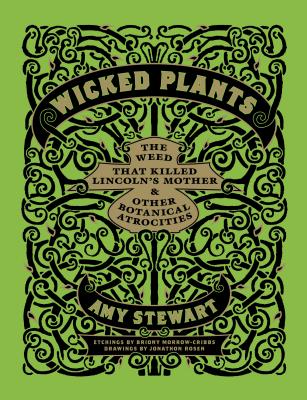
Wicked Plants - Amy Stewart

What a charming and interesting book.  I had no idea that so many common plants were so freaking bad for me and might possibly be able to kill me or my cat (this is imagining that I have a cat of course).  For instance, did you know that tulip bulbs can cause blisters on the hands of people who package them because they are slightly poisonous?  I mean, I always knew that tulips could inspire murder and ruin economies, but blisters?  Now that's crazy!

The book isn't all poison though.  It also highlights plants that are destructive, and illegal, intoxicating, unpleasant, and dangerous.  Apparently Stewart's opinion is that tobacco is the most dangerous plant of all.  I'd have to say I agree with her on that one, though the Australian Stinging Tree sounds excruciating.

There were so many little tid bits about the plants I see every day or even keep in my house.  The book isn't set up in a way that is meant to be shocking or scary; it's interesting and fun.  The author includes fun little facts and stories about most of the plants, which makes it more fun to read.  It's also such a nice size and comes with a ribbons attached to use as a book mark.  Why don't all hardcover book come with ribbons damn it?

I had mixed feelings about the art in the book.  The etchings, done by Briony Morrow-Cribbs, were very well done and interesting.  They were beautiful and eerie at the same time, very much in the spirit of the book as a whole.  They also remind me of the art my friend Lisa does, which helps.  However, the little illustrations, done by Jonathon Rosen, were so poor that they actually annoyed me.  They look like hasty doodles.  I actually checked out his website because his bio in the book had some impressive commissions.  His work varies from the doodly things seen in this book, to some impressive illustrations for newspapers and magazines.  Go figure.

Basically, when I was done reading this book, I wished there was a poison garden somewhere around here to visit.  I have such a new appreciation for the scary power of the plant world.  I always knew dangerous plants existed, but I guess I didn't realize just how common they were, and just how dangerous they could be.

Monday, January 18, 2010

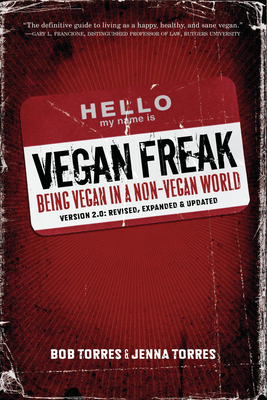
Vegan Freak by Bob and Jenna Torres

This book is a must have for any vegans, vegetarians, or people somewhere in between. It's kind of a how-to guide to surviving in a very non-vegan world, where you will probably be looked at as a freak.

It deals with the obvious question of "why vegan?" and also the less obvious question of "why vegan and NOT vegetarian?" It also deals with the parts of veganism that involve non-food items. I especially like the chapters about how to handle non-vegans, specifically family and friends.

I really identify with and needed something like this book. It explains the importance of having vegans friends and a vegan community. I live in a small town and I'm lucky to know even one other vegan. I spend a lot of time reading vegan blogs and I communicate with my vegan friends in NY whenever I feel like I need a vegan ally. Part of the reason I have this blog is for and outlet for my life and my veganism is part of that. It's frustrating to feel like you're the only person around who sees the very serious cruelty involved in the non-vegan ways of the people around us, especially the people we love.

The only major criticism I have about this book is the editing. In this case, it seems like the major part of the editing process was done by a spell checker and not much more. I found so many major grammatical errors in this book it drove me mad. Simply sending the book to anyone else and having them read it cover to cover would have solved so many of the editing issues. Oh my god I have never read a book with so many typos. Even my college papers had less problems than this book. Bob and Jenna, if you're reading this, I adore you guys, but please fix this stuff before the next printing. (For all you people out there who would argue that my own blog is full of errors, I'll remind you that I openly admit to not proofreading mot of this, it's not a published book, and I make absolutely no money from it. It's a hobby, not a job and is in no way professional.)

I don't want to make the book sound amateur, it's not. It's so clear that a lot of thought and research went into it. They include many other books to refer to for more information and help on any of the many topics they touch on in the book. It's a starting point, and an important one. So, if you're vegan, or thinking about it: go buy this book! Or borrow it, whatever.

Wednesday, January 13, 2010

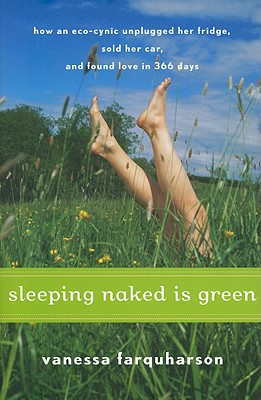
Sleeping Naked is Green by Vanessa Farquharson

Vanessa Farquharson is a movie critic for the Canadian newspaper National Post and doesn't care too much about the environment, until she sees "An Inconvenient Truth," and finally feels that she needs to do something. But what? She decides to take on a challenge of making one green change in her life every day for a year.

The book is divided into chapters by month and each month starts with a list of the changes she made each day. It starts out simply: Changing to recycled paper towels. But she soon starts to become desperate and shuts off her freezer, then her fridge. The order in which she makes her changes is... well, odd to say the least. For example, she turns off her fridge before putting a brick into her toilet tank. She gives up toilet paper before she gives up her vacuum. She also waits until day 198 to sign up for CSA.

She soon finds that being just a little green suddenly makes her want to be as green as possible. She wants to be the greenest in the green movement and often finds herself jealous and competitive of other environmentalists. At the same time she struggles with frustration over making certain changes and exhaustion from having to think new ones up. Some might be seen as a cop-out (writing only haiku poetry, signing up and then promptly taking down her profile on greensingles.com) but you have to give her credit and cut her some slack, she's making 366 (leap year) changes.


She whines endlessly about how hard it is to be an environmentalist, but when it comes time for her challenge to end, she keeps almost all of her green changes. This book is just further proof that anyone who is educated about the changes they can make and why they should make them (not to mention how easy it can often be), will make them. And they will start to care about it too. It's easy to claim ignorance about the environment and do nothing, but once you do know, it's harder to forget. She even manages to green her family a little, even though they were adamantly against environmentalism at the start.

This book is inspiring. And funny. And down to earth. Plus it's a great read. It's good information for environmentalists or just people curious at where to start. The green movement is often seen as either too extreme or just not enough, but Farquharson struggles to find a middle ground. Reading this book made it more apparent to me just how easy it could be to step up my own greening. It's nice to see all of her changes in a list in each chapter, because although she doesn't talk about each one, you still know what kinds of changes she is making.

Because Farquharson is a journalist, her writing is interesting and engaging. She talks about the changes and why she made them, but also what the result is on her life as a a whole. Not to mention she's hilarious. The book isn't just a list of changes that you can make, it's a story about making a difference. At the end Farquharson isn't a preachy environmentalist. She sticks with her own changes, because she sees no point in going back. But there's no denying that the story is an inspiration to those who read it. It's a story about how little changes can make a big difference, not just to the Earth, but to your entire life.

Saturday, December 26, 2009

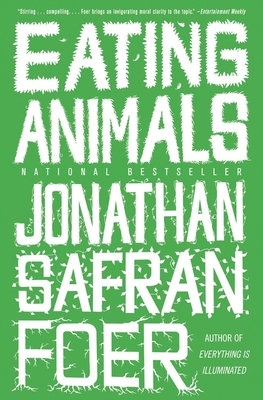
Eating Animals by Jonathan Safran Foer

Eating Animals is kind of a 'tough love' sort of a book. It's not a lecture and it's not a rant. It's different than most books about vegetarianism. Foer wants to put the facts out there and let you make the decision. He writes this book under the assumption that once people have all of the information, they'll make the choice that's right for them. And I agree. There are people out there who will never care about animal cruelty, or will care, but still tell themselves there is nothing they can do. Those people are a lost cause and the book wasn't written for them. It was written for people who do have enough will power to make changes in their lives. This book is for people who know that the choices they make affect everyone around them.

Foer started to think about vegetarianism (and this book) when he started to think about being a father. Like so many people he had wanted to be a vegetarian for years and had struggled with it his whole life. He knew it was the right thing to do, but still couldn't manage to do it. He cared about animals, but he also cared about eating whatever tasted good to him. When he realized he was to become a father, his food choices suddenly started to matter. He was to set an example for his son. He was going to be a role model and he wanted to be a good one.

Foer tries very hard to get all angles of the argument. He gets letters from activists of all kinds, factory farmers, family farmers, a vegan who designs slaughter houses, a vegetarian who raises beef cattle. Of course these contradictions annoy me, but they also make me really think about what the goal is. Is the goal to stop animal cruelty, or stop animal slavery? Is the goal to cause less suffering, or no suffering? At the end of the day do these people feel good about the choices they have made? Do they think they are making a difference? Do they really feel happy about the lives they are leading? If they do, maybe they are doing more good than harm. Maybe they are on the best path they can be on. Of course to me, and to Foer, any harm at all is enough reason not to eat meat (most of these family farmers still brand their cattle, and all of them send their animals to slaughter houses. None of these animals ever grow to full adulthood).

My favorite part of this book was the chapter of definitions. Several pages with common animal farming terms put into plain (and sometimes hilarious) English. Even though I read heavily on the subject of food, there are so many things in this book I had never heard before, so many good points that had yet to be made. Are you aware that cattle are often fed ground up cats and dogs that are euthanized at shelters? That pigs become so distressed in their living conditions that even a tractor driving by outside (they are kept inside for their whole lives) can cause them to fall over and die of fright?

He ends the book with Thanksgiving. To have a turkey, or not to have a turkey? He talks about tradition, culture, family history, values. He talks about the origins of thanksgiving and the history of the turkey as a center piece. He points out that the turkey doesn't make Thanksgiving. It's the coming together, the family, the thankfulness. The truth is, having a dead, mutated, genetically altered, abused carcass as the center to a holiday about charity is a gross contradiction and he sees that. The turkey doesn't make his holiday table.

My only criticism of this book is this: like Micheal Pollan (who he chastises for doing just this), Foer doesn't address his own contradictions. Not once does he mention the dairy industry. Not once. He talks a bit about laying hens, but not enough to actually point out that eating chicken eggs is just as bad as eating chicken meat (if not worse because at least boiler hens are not kept in battery cages). He lets himself completely off the hook. The entire book is dedicated to the problems with factory farming, but that's where more of our dairy comes from, and almost all of our eggs. If he finds issues even with the family farms in his book (which he does), than how does he explain his consumption of dairy and eggs? I kept waiting for him to address this, but it never comes up.

So yes, I loved this book. I think it's a wonderful starting point. A well written starting point. But it is just a start. I wanted it to go further.