Monday, March 25, 2013

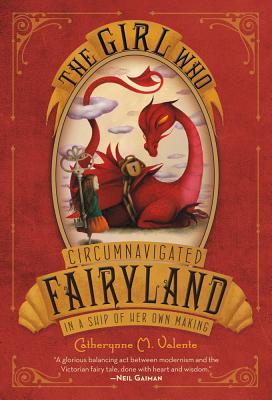
The Girl Who Circumnavigated Fairyland in a Ship of Her Own Making by Catherynne M. Valente


September is a very bored little girl.  Her father has shipped off to war and her mother is raising her alone.  Her mother works all day repairing engines in a factory.  They live in Nebraska, where there is nothing for a little girl like September to do.  She wishes endlessly to be taken off to Fairyland like so many bored children before her.  One day, while she is washing teacups, that wish comes true and September gets a visit from the Green Wind, riding on the Leopard of Little Breezes. They take her away to Fairyland, where she has the most amazing adventures.


The characters in this book are so unavoidably likable, despite their faults.  September is repeatedly called heartless, but we know she isn’t.  She is sometimes said to be selfish, but she is nowhere near it.  Even the villain is likable in her ability to be such a fantastic fairy tale villain.  Sure, she’s an evil ruler, but she’s just a kid.  An angry one at that. Of course the friends September makes along the way are the most wonderful friends anyone could ever hope to make. There's A-through-L, a Wyvern and Saturday, a marid, and of course Gleam, a kind-hearted paper lantern.


Valente is an exceptional writer.  She creates a Fairyland that is both familiar and fantastically strange.  Her imagination has run wild all over the pages of this book, and it’s a really, really mind-blowing imagination.  It’s not often that a writer can create a world so complete and easy to visualize.  Her descriptions are lush and vivid, even describing colors in more depth than I thought was possible.  It helps that she loves some of the same things that I do, like autumn and pumpkins and green smoking jackets, which she spends extra time applying her loving pen to.  Her vocabulary is luscious and so needed in books for young readers.


It’s impossible for me to write this review without pointing out the obvious fact that female characters like September are so needed in children’s literature.  September is an amazing little girl.  She makes friends easily and defends them without a thought.  She literally travels to the ends of the earth (without shoes, no less) to save them, and she does it alone.  She is willing to sacrifice everything for them. There’s no annoying underlying romance to it, as there is in other popular kids books.

It also helps that September is being raised by wrench-wielding, do-it-yourself mother, though we get only get small pieces of the woman she is. September
doesn’t get her strength from anyone but herself, which, like most of us, she has to learn along the way.

http://www.indiebound.org/book/9781250010193" target="_new">Buy it indie!

Monday, March 11, 2013

Paleofantasy by Marlene Zuk

I first heard of Paleofantasy when our rep from WW Norton, David Goldberg, came in to the bookstore to talk about some upcoming releases.  Naturally I snatched up the book as though everyone in the room would immediately lunge for it, but, as usual, my co-workers just stared at me.  It’s no secret that I love science, but this whole paleo-diet trend that’s been making the rounds has made me even more passionate about my desire to see science finally being taken into account before anyone jumps on the paleo-bandwagon.  

Paleo-dieters and lovers of the caveman lifestyle believe that homosapiens stopped evolving some time around moving into caves and that modern man is not fit for our current lifestyle.  They blame all manner of diseases on the idea that humans were not meant to live as we do now and that agriculture is killing us.  Marlene Zuk, a biologist and professor at the University of Minnesota, argues that evolution doesn’t stop and to argue that we were “meant” to do something is an argument that evolution has some kind of end goal, which is a little ridiculous. Zuk combines biology and anthropology to disprove many of the myths that paleo-lifestyles are based on.  Although we don't know exactly how early man lived, Zuk dispels the most common ideas through meticulous research and, best of all, science.

This book isn’t an attack on paleo-lovers, it’s a scientific answer to the believe that we’d all be better off as hunter-gatherers.  In many cases the arguments made about caveman lifestyle are not true to begin with, so there is no reason to believe that living that way now will be any healthier.  Zuk’s overall point was that there is no one way that cave-dwellers lived.  There were multiple societies, each with their own way of living and eating.  For example, Zuk explains how our ability to digest dairy and grains has been a recent(relatively speaking) product of evolution.  However, there is evidence to suggest that some groups of early-man did eat grains or dairy, while others didn’t.  Paleo-enthusiasts may be healthy because they make an effort to exercise and not eat processed foods, but not because they don’t eat grains or abstain from dairy.

Zuk isn’t on a mission to make paleo-people feel bad, or ruin their dreams of caveman rockstardom; her only desire is to shed some light on the science behind the the trends.  In some cases, there is scientific evidence to back up the healthfulness of paleo-lifestyles.  For example, barefoot runners run differently than those in sneakers and tend to suffer fewer injuries.  In terms of child-rearing, there seems to be a case for raising children with alloparenting, letting a newborn set it’s own eating and sleeping schedule, and keeping the child either in, or near the parents’ bed.  

Paleofantasy is a fascinating and accessible read that I had trouble putting down.  This book shows that while it’s no secret that many of our modern problems are caused by poor lifestyle choices, that doesn’t mean we all need to give up eyeglasses, stop eating quinoa, and give blood as often as possible to try and imitate the life we think (without any real scientific evidence) cavemen may have lived. 
Buy it indie!

Monday, March 4, 2013

Why I suck at blogging

So I guess you're expecting a blog post about an awesome new book I read.  Well, I did read an awesome new book and I was all set to write a post about it yesterday and have t up today.  The book is called Paleofantasy by Marlene Zuk and I loved it.  I loved it so much my brain was filled with hearts and stars while I read it.  But, I didn't write a post about it.  I am now going to be super-lame and explain my day yesterday, chock full of First World Problems.

It all started at 9am, when I was getting ready to leave for work.  I like to leave about an hour early so I have time to settle into the day and gauge the mood of everyone around me.  I got all of my stuff together and was about to walk out the door, when I realized my keys were not where I usually leave them.  Normally, I put them on the table next to the door.  I checked my coat pockets.  I checked my pants pockets.  I checked my backpack, the couch, the floor under the couch, the grocery bag from the day before, I even checked inside the fridge.  Nope.

Let me just stop here and explain that I never lose my keys.  I'm one of those annoyingly responsible people that always puts things away the moment I'm done using them.  After 15 minutes of looking, I finally texted my boyfriend to ask if he had picked them up for some sleep-induced, pre-coffee reason.  I was then able to locate the spare set of keys I didn't know I had and be on my way.  The clicker on it doesn't work, so when I got to the bookstore, I left the car unlocked and the alarm in valet mode so that I wouldn't need the clicker to get in.  Great.  Work.  Barely on time, but here.

I was scheduled to be in the kid's department all day, most of it by myself because of some staffing conflicts with other members of the kid's crew.  It was pretty busy and the customers seemed determined to make a mess the second I thought I was finished picking up.  My manager came in on his day off to lend a hand and things were going smoothly.  Then he got called away and I was on my own again.  None of this is a big deal, it just meant that I couldn't draft out a review for the book.  I thought that might happen, so I figured I'd just write it when I got home last night.

Fast forward to 7:08pm when my co-workers and I were getting out to our cars.  I grabbed the door handle and pulled.  Shit.  The car had locked itself, like the glitchy, resentful, little beast that it is.  I used my key to unlock it and, sure enough, the alarm went off.  An uncontrolled string of swears escaped my mouth.  I tried to start the car anyway, but of course that didn't work.  I tried waiting for it to stop, then starting it, but that just set it off again.  I pulled out the manual and found the part about the emergency shut-off button for the alarm.  My co-worker gave me a flashlight and I rooted around under the steering wheel looking for it, when the police show up.  I then explained what the heck I was doing with a flashlight under the steering wheel of a car with the alarm going off.  Another co-worker gave me a screwdriver to open my clicker and see if any of us had the same battery.  No such luck.

I figured I'd just buy a new battery, but the radio shack and the drug store were closed, so that left gas stations and supermarkets.  Finally, after trying every open store in town (so maybe 5, tops) my boyfriend had to come to town with my car keys (which it turns out he did take by accident, because he hates me and wants to ruin my life. Except not at all and it was just a long day) and disarm the alarm so we could go home.  It was probably 9pm when we finally got home, so there was no way I was writing a book review.  Sorry.

That's my lame story.  The point is, if you're thinking about moving to a really small town in Vermont, don't.  At least not without a working spare set of car keys.

Monday, February 25, 2013

The World Until Yesterday by Jared Diamond

Many people fantasize about a world long gone, where life was less complicated by modern day complexities and technology.  Diamond has set out to clarify just what we gave up by moving out of hunter-gatherer bands and into high rises. His latest book compares traditional societies with modern lifestyles without glorifying or vilifying either.

Diamond explores just a few aspects of life, including conflict resolution, war, child rearing, the treatment of elderly, eating habits, and even how different people react (or don’t react) to coming in contact with a stranger.  He argues that both modern cultures and traditional ones have some advantages and some weaknesses in all of these areas.

The fantasy of a less complicated life is just that, a fantasy.  Traditional cultures may not have to worry about job security, but they do need to worry about famine and disease.  Some may also need to worry about whether or not they will be seen as useful as they age, or if their family will kill them as they become more of a burden.  Modern society also has the advantages of being able to live peacefully with people we don’t know, whereas Diamond explains that many traditional people might be inclined to kill a stranger on sight.

Just as there are advantages to modern society, there are areas where it falls behind the traditional ones.  Looking specifically at American culture, most children speak and understand only one language, though recent studies have shown there are advantages to being multi-lingual, which most traditional societies are.  Traditional societies also don’t suffer from the same western diseases that many Americans do, such as hypertension, type-2 diabetes, and heart disease.  People in traditional societies tend to be fitter; their lower life expectancy is generally the result of less access to emergency medical care and the availability of food.  According to Diamond, children in traditional societies also tend to focus on games that require cooperation and critical thinking, but almost never on competition.

Knowing nearly nothing about anthropology or traditional societies, I still found this book perfectly accessible and highly interesting.  I found myself looking forward to each new chapter and the critiques and observations it would contain.
As always, Diamond is a readable expert, making this book perfect for the casual reader or the scholar.  

Buy it indie!

Tuesday, February 19, 2013

President's Week (AKA Week of Hell)

Well, I know I promised a new post for yesterday. But then the retail nightmare of presidents week happened, which left me without my usual quiet Sunday afternoon time to work on a book review for the store (and also this blog).  So, the review will have to wait until next week.  For now, here is a fun collection of customer interactions.  I'll try and add to this throughout the day today. #bookstorebingo

Customer: Hi, is that area with the tables a separate business?
Krysta: The cafe is a separate business, yes.
C: So they have a menu?
K: Yes...
C: But if I order, can I eat at those tables, or are the tables a separate business?

K: Ma'm? Is that your child?
C: Yes is something wrong?
K: We prefer if he didn't put the toys into his mouth unless you buy them first.

K: Hi, are you having fun with those stuffed animals?
C (maybe 4 years old): Yeah!
K: Where is your mom?
C: Oh she's just looking at stuff.
K: Where is your dad?
C: Skiing.
K: Can you see your mom right now?
C: No.
K: Does she know where you are?
C: No.
K: Well we better go find her.
Mom: Is something wrong?
K: You can't leave your child unattended in the store
Mom: Why not?

C: Is this book for sale?

C: Can you help me find a book for my son?
K: Sure! How old is he?
C: He's in first grade, but the first grade books are too easy for him.
K: OK, here are some second grade books that are really fun.
C: No, these are too hard.  He's just barely beginning to sight read!

C: I'm trying to find a book for my granddaughter.  She's in second grade, but she reads on a 6th or 7th grade level.  If she doesn't know a word, she looks it up.
K: Here is a job application to this store.  Have her fill it out when she turns 17.

C: Do you sell Nerf guns?
K: No.
C: None at all?
K: No.
C: Nothing like a Nerf gun?
K: No, we don't sell any guns.
C: (laughing) You don't sell guns?! That's funny.

C: You read this? (holds up copy of Omnivore's Dilemma)
K: Yes.
C: You read the whole thing?
K: Yes.
C: Wow...

This one from co-worker Amy:
C: Where are the books?

C: Excuse me. Do you read books?

From another co-worker, Tracy:
C: I need help finding something.
T: OK, what can I help you find?
C: A book.

From Jess:
C: Do you have books by authors?


Monday, February 11, 2013

Eating Dirt by Charlotte Gill


Eating Dirt is not at all what I was expecting.  Tree planters are not the kind of people I was expecting either.  Tree planters are down and dirty.  They are not flowery people and Gill makes no attempt to hide all of the nitty gritty details of their working lives.  She also makes no secret that while they do believe in the work they are doing, at the end of the day it's a way to pay bills, make money, and get by.  They're not on the front lines of environmentalism, they're more like clean up crews and they are a little jaded from it.  Once they get to a site, it's already been logged.  There is no natural beauty left, just the broken landscape and another opportunity to earn a day’s wage.

Despite all of this, the book is not sad.  It's not about environmentalism, it's about tree planters.  It's their story.  And those stories are not boring, or dark, or without hope.  They are hard working people but you've never heard about them before.  They've been around as long as man has been logging, and they'll be around as long as there are trees left to be cut down and replanted.

Gill brings this book to life with her rich writing and I found myself forgetting that I was reading non-fiction.  I wanted to hear the end of the stories she told and what happened to the people who passed in and out of her tree-planting life.  But true to life, the stories aren’t over yet and so have no ending.  Sometimes people just drift away.

Although the book reads as fluidly as fiction, there's no mistaking the truth in Gill's words.  She has both researched and experienced the lives of trees alongside man.  She explains the history of logging and tree planting.  She explains the fall of civilizations from over-logging.  She reminds us that, for all of our advancements, we are still making the same mistakes that many doomed civilizations before us had made.  For all of our technology, a tree’s purpose in the world has not changed.  All that has changed is man's ever-growing desire for the endless uses of felled trees.

Buy it indie!

Monday, December 3, 2012

The Kobo eReader

Target Audience: eReader late-bloomers, those who are curious and nervous about technology, or your blind parent/grandparent, who wouldn't be caught dead with a large-print book.

Yep, you read that right, I'm blogging about an eReader. Due to popular demand and the emergence of a new brand, the bookstore I work in has finally started carrying the Kobo eReader. The booksellers are not thrilled about this, but at least this eReader comes to us as an indie-friendly version of Amazon's Kindle. It reads a lot like a Kindle, with eye-comforting ‘eInk’, which is very similar to reading on paper. This is not like reading on your computer or your iPad so it won't give you a headache. The indie-friendly part of it comes from the fact that when you purchase this from our store (or presumably any store) a percentage of your future purchases go to the store you bought it from. The Kobo was designed with independent stores in mind, so that our customers can buy eBooks with our independent store in mind as well.

I took the Koboglo home for a few evenings to test it out for myself. This eReader is black and white and features a frontlight that doesn't glare and makes reading in the dark a special treat. I’m still not a fan of eReaders as a whole, but I really liked this for reading in bed. I tend to read old paperbacks in bed and my reading light is heavy and sometimes flickers. I often give up on reading long before I am tired because the light is so annoying. I know, I know... I could get a different and better reading light, but I haven't, because I have to make stupid things difficult for some reason. The Koboglo is easy to see in the dark, but isn't so bright that it keeps my bedtime neighbor awake. There is no flickering, and once the book is loaded, it's responsive to page turns and bookmarking with no fuss. The light also means that I can get all the way under the covers in a Krysta-cocoon so my nose isn't cold on those chilly Vermont evenings. When I do that with my book light, it tends to fall off my book. Extra bonus: cats do not find eReaders as tasty as paper books.


As much as I enjoyed using the Koboglo at night, I must be an honest bookseller and point out that the Kobo is not the fastest eReader on the block. There were times when I tapped the cover of the book I wanted to read and then waited. And waited. And waited just a bit more. But, just when I thought the eReader had given up on life in general, it snapped out of it and loaded my book. However! Once the book was loaded, there was no waiting. In and out of standby mode took no time at all and when I wanted to pick up the book I got half way through the night before, it was there, waiting for me, with cookies.*


I wouldn't use it for my non-fic books because I do a lot of back and forth reading with those and sometimes underline bits I want to come back to later (or blog about).  I wouldn't recommend this (or any eReader) to people who like to take notes in their books.  While the option is there, it’s not as easy as just writing in a real book.  You can, however, dog-ear pages in the Kobo. (If you’re the kind of insane person who would do such a thing to a real book, then please yes do buy an eReader and stop mangling books. I bet you’re a spine breaker too, aren’t you?)  The final downside of this (or any) eReader, was given by my manager: When you have finished reading, you can not slam an eReader shut in that satisfying way only a book-lover can understand.

I'm now going to take a moment and explain why not all eReaders are created equal. While it's true you might be able to get an Amazon Kindle for maybe a bit cheaper and maybe it's a bit better than the Kobo, in terms of features and speed, there is a key difference that should matter to all readers, regardless of how they feel about buying from local and independent stores. When you pay for an eBook from Amazon, even though you are paying the same amount you would for just about any eReader, you do not own that book. Amazon can (and has) wiped Kindles owned by unsuspecting customers, with no notice or clear reason given. Because, even though the Supreme Court says corporations are people, those corporations are not legally bound to also have souls. Kobo doesn't do that. When you buy an ebook from Kobo, you own it. It's yours. End of story. Just like a real book. So if you're in the market for an eReader, a Kobo is a way to be tech savvy, stay indie, and own what you buy (which is what the cool kids are doing these days).

*Kobo does not provide cookies. As far as I know, no eReader does provide cookies. When they start providing cookies, I will be buying one. For now, I shall continue to beg everyone around me to provide cookies instead.

Monday, November 19, 2012

Consider the Fork by Bee Wilson

Target Audience: Food lovers and cooking enthusiasts. This would also work for someone who likes to read about cultural history and the history of everyday objects (see also: Brilliant by Jane Brox).

I love cookbooks, but I don't think about the ingredients as something that just magically appear in my kitchen.  I go to great lengths to know where my food comes from, who grew it, what went into producing it, and the kind of nourishment it provides. It's no secret that I love reading about food, but before reading Consider The Fork, I never really put much thought into my kitchen tools.  What of the vegetable peeler (which I don't own)? Or the wooden spoon (also don't own)? Or the ever-obvious knife (own many)? Wilson's detailed research changes the way we view all of those items we take for granted. After all, my great-great-great Italian grandmother didn't make her famous pesto in an electric food processor, but I'm not about to give mine up for the job.

Consider the Fork tells the deliciously fascinating history of cooking and culinary tools. From knives to coffee grinders to the kitchen fire itself, readers will relish every moment. Just how long did it take us to invent the vegetable peeler? How different are our whisks from the whisks of the Middle Ages? Consider the Fork takes the reader through the history of how we slice, cook, measure, grind, and mold our food.

The book starts out with the obvious beginning: pots and pans. Wilson explains that hundreds of years of cooking has yet to produce a material that will create a pan that will heat evenly, has non-stick qualities, is cost effective, won’t poison the eater, and is also durable. After years of trials and testing, an engineer named Chuck Lemme decided that cast iron rates highest among all available materials. Since I already have cast iron pans, this is the only chapter that doesn't make me immediately want to go out and buy things for my kitchen. Much.

Consider the Fork runs the risk of costing a small fortune for kitchen worshipers, such as myself. The chapter on knives had me all excited to buy a mezzaluna and a santoku, until I realized that the kitchen knife I use everyday is based on a santoku. The chapter on measuring has me convinced that I need to get digital kitchen scales and that it will solve all of my failures with baking.

The final chapter gives the history and origins of the modern kitchen. The kitchen as we know it did not exist until fairly recently. Before electricity, food was stored in cooler rooms away from the blazing heat of the cooking fire. Not until the fire was contained and the ice box was introduced, did food preparation and storage begin to take place in the same room as the cooking. It's odd to think that the room I consider to be the heart of my home would have been a strange sight just a century ago. Our modern obsession with the perfect kitchen is only possible because of the rich history of food preparation.

As a little bonus, each chapter is paired with an appliance that relates to it. These little sub-chapters are only about a page long and give an abbreviated history of a relevant kitchen tool. The pots and pans chapter ends with rice cookers and the measurement chapter ends with an egg timer. These little sections break up the book and give the reader a fun little history of some of our favorite kitchen objects.

Consider the Fork is also peppered with little illustrations of the tools that Bee refers to. I'm not always a fan of these kinds of pictures in books, because they can break up the text in weird ways and seem unnecessary. That being said, they are wonderful in this book. Annabel Lee depicts the implements Wilson refers to most often, which is necessary when trying to explain the subtle differences between certain kinds of knives and eggbeaters that the reader may have never heard of. Her pictures are simple and not at all distracting, all while capturing the personality of the book perfectly.

I will be bending over backwards to recommend this book to customers all holiday season. It is a must-have for any foodie or cooking enthusiast to savor. It's completely unique and it just came out, so you can be sure the recipient doesn't already own it, but will treasure it immediately as a delightful and juicy account of our kitchens.
Buy it indie!


Monday, November 12, 2012

One Hit Cookbook Wonders

Every now and again, while at work, I'll come across a customer sitting in the cookbook section copying down a recipe from one of our books. Some may take issue with that, but I've never really seen the harm in it. Who wants to buy a cookbook for just one recipe anyway? Oh wait, I would.

I've got tons of cookbooks and I'm constantly talking myself out of buying more. I don't even use cookbooks for 95% of my cooking, but I love the inspiration. I'd be lost without baking books, because although I can make a yummy dinner from a seemingly empty fridge, I can't bake to save my life. The thing about having the whole book, is that if you know one recipe is good, chances are, you'll like most of the others as well.

I've got several cookbooks that I bought, mostly because I love one specific recipe. Vegan Brunch is the biggest offender; I use the Perfect Pancake recipe every week for Pancake Saturdays, a weekly tradition in my home. After purchasing it, I discovered other fantastic recipes in there like English muffins, cocoa raspberry muffins, and Tofu Omelets (trust me) , but oh, man those pancakes turn out perfectly every time. You don't even need any fancy vegan things. I often substitute water for non-dairy milk and you'd never know the difference.

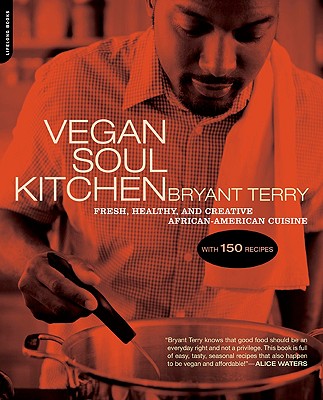
Vegan Soul Kitchen is another one. Well, actually, I use two recipes from that one with regularity. The coconut oil pie crust will come out perfectly no matter what and without tears. My co-workers don't believe me, but I copied down the recipe for some of them, so someday maybe they'll get over the fear of "strange vegan ingredients" and try it out. Truth be told, there are no "strange vegan ingredients" in anything I cook, but I guess even coconut oil is not a regular occurrence in non-vegan pantries. The other favorite from this book is the red rice. Bryant Terry does the most amazing and tasty things with rice, that I would never have thought of on my own. His book can be loved by vegans and non-vegans alike for his whole-food ingredients and his talent for re-thinking the mundane (like rice).

Jo Stepanik's The Uncheese Cookbook is a staple in my kitchen. I originally bought it years ago to help a non-vegan boyfriend come to terms with the loss of cheese whenever I cooked. I don't usually use vegan substitutes for animal products, because they're weird and icky. These are homemade sauces, dips, and blocks that are 100% all natural, because they are home made. You won't find any wacky, hard-to-pronounce ingredients in this book. Best of all, everything in the book can be ready to eat in a pinch. My favorite is the Gooey Grilled Cheese Sandwich or the Macaroni and Cheese Sauce. But the recipe I use most often is actually not a cheese alternative at all, since I still tend to make those only by request of dinner guests, but a pizza dough recipe. The book naturally falls open to that page when I pull it out monthly to make a yummy vegetable pizza.

I'm guilty of writing down recipes from a book I didn't think I'd want later, but my shelves then become cluttered with bits and scraps of paper, and I know I'll never find that awesome recipe for Mexican Chocolate Cupcakes again because I think my cat probably chewed it up while trying to get my attention. And if I can find the recipe again, I won't know what book it came from and which author to trust with my cupcake needs, because I wasn't smart enough to write that information down. I better stop now, because I've made myself hungry. So if you're in the market for a new cookbook, or a new recipe, you could get out a pen and paper in your local bookstore, but you might be missing out on so many other fantastic recipes that you might have found if you brought the book home.

Monday, November 5, 2012

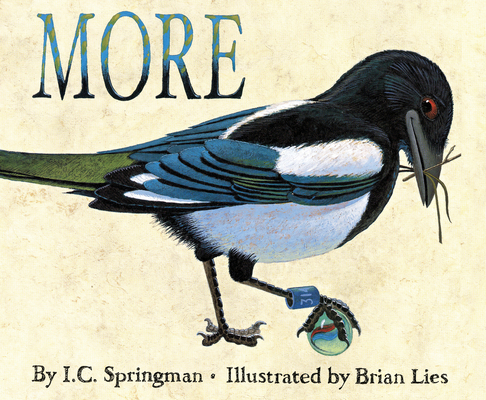
More By I. C. Springman, Illustrated by Brian Lies

Target Audience: The child of a book lover, especially, or any kid, age 1-7ish.

This is one of the best children's books to come out this year.  There are other great kid's books (which I'll try to get up before the holidays), but none that I love so much as this one.

The story is about a magpie that, in the beginning, has nothing.  Its mouse friend gives it a marble and it understands what it means to have something.  Suddenly the magpie wants more.  Just a little more.  Then a lot more.  And then way, way too much.  Luckily the mouse is still there to help.  It's a valuable lesson in a culture where your life's value can seemingly be measured by how much you own, rather than how much you really need.

One of the things I love about this book, is how few words it has.  Most of the story telling is inferred with pictures and left to the imagination.  That paragraph above has more words than the whole book, so it's great for the very little ones, and those just learning to read.  These factors will allow the book to grow with the child.  Kids at different points in their life will get different things from the book, so it's not like a board book that you read to a toddler a few times and then may end up throwing away when the child outgrows it.

The pages are full of all of the things the magpie has collected, like marbles, string, coins, stamps, toys, everything.  There's even a Pink Floyd cassette tape, which is obviously there for the adult reading the book, because the current generation has never seen or heard of a cassette tape (I know this because when I told a girl the only audio book available for the book she wanted as on cassette tape, she had no idea what I was talking about, which lead her mother and I to exchange a "kids these days" look).  Having all of these items adds another layer to the interactivity of reading to a child.  Even if the child can't read, perhaps she can count the marbles?  Maybe he can find all of the purple things?  What kind of coin is that? Where do you think that Lego brick came from?  Someone I sold it to planned to use it with kids with learning disabilities, which again, illustrates its versatility.

You can't talk about a kid's book without also talking about the art.  It is fantastic.  To me, a children's book is just as much art, as it is story, so even if the story is great, the art has got to support it.  Because the art does most of the story-telling in this book, there's even more pressure for it to be great, and illustrator Brian Lies lives up to my completely objective and outrageously-high standards.

I could never recommend a children's book if I didn't think it would be cherished forever, and perhaps saved for future children.  After all, I still own my favorite childhood books.


Buy it indie!